




 stay affordable, sleep sustainable – Ø 3.5 kg CO2e per guest per night
 World’s largest Hostel Chain - With 30,000 Beds

Die Toten Hosen in Düsseldorf: The ultimate fan tour through the home of the German punk legends
Düsseldorf and Die Toten Hosen – this connection is far more than just a story of where they come from. Many bands hail from a particular city, but few are as closely intertwined with it as Die Toten Hosen are with the capital of North Rhine-Westphalia. Düsseldorf is not merely the place where the band was formed. The city is part of their DNA: the old town, the football club, the pub culture, the streets and the people who shaped the rough, direct and sometimes chaotic charm of their early years.
Anyone setting out to follow in the band’s footsteps will therefore not find a classic sightseeing tour. Instead of castles and museums, the itinerary features pubs, backyards, football stadiums, concert venues and streets. It’s about the places where punk history was written – and the corners that have retained the feel of the band’s early years to this day.
If you want to understand Die Toten Hosen, you have to understand Düsseldorf. The band is far more than just a successful rock group from North Rhine-Westphalia – it is a part of Düsseldorf’s identity. Since their formation in 1982, Die Toten Hosen have shaped the culture of their home city and continue to represent Düsseldorf on the world’s biggest stages to this day. The band’s story does not begin in a posh recording studio or a concert hall, but right in the heart of the punk and subculture scene in Düsseldorf’s Old Town.
Düsseldorf: the birthplace of German punk rock
The story of Die Toten Hosen does not begin in a huge arena, but at a time when punk was still a counter-culture movement. In the late 1970s and early 1980s, Düsseldorf developed into one of the most important centres of the German punk and underground scene.
Whilst other cities had their own musical identities, Düsseldorf was particularly characterised by a blend of art, provocation, industry, nightlife and a keen desire to be different. The scene was small, direct and personal. Musicians didn’t perform on huge stages, but in small clubs, right up close to their audience.
It was precisely in this environment that Die Toten Hosen emerged. For fans, therefore, a trip to Düsseldorf is particularly worthwhile. Many venues from the band’s early history still exist today or serve as reminders of those wild days when Campino and his bandmates were still a long way from selling-out stadiums.
The early years were characterised by gigs in small venues, wild nights and a scene where everyone knew everyone else. It was from this atmosphere that the typical Hosen spirit emerged: approachable, loud, humorous and always with a certain attitude.
Ratinger Hof: The must-visit spot for Die Hosen fans
If there’s one place every fan should visit, it’s the Ratinger Hof – the mecca for Die Hosen fans of all ages.
Situated in the heart of Düsseldorf’s Old Town, the club was the hub of the local punk movement in the late 1970s and early 1980s. It was here that musicians, artists, students, outsiders and night owls came together. The place wasn’t just a club – it was a meeting place, a living room and a space for experimentation for an entire generation.
For Die Toten Hosen, the Ratinger Hof was one of the defining venues of their early days. Here, the band moved in a scene where music was less about perfection and more about energy, rebellion and fun.
Anyone standing in front of the building today might not immediately get the feeling that they are at a historic music venue. That is precisely what makes it so appealing. It is not an over-staged monument, but a genuine part of the city. Fans should take their time – don’t just snap a photo outside the door and move on. The whole of Ratinger Straße tells the story of that era.
Noteworthy: In September 2025, Die Toten Hosen returned to this venue for the first time in over 40 years for an exclusive concert. For many fans, it was an emotional return to the band’s roots.
Ratinger Straße: Where Düsseldorf’s past and present come together
Ratinger Straße is one of the best-known streets in Düsseldorf’s Old Town. Today, it’s a mix of pubs, bars and nightlife. But if you look more closely, you’ll discover traces of the old scene. For Die Toten Hosen fans, Ratinger Straße is almost more important than some concert venues.
In Die Toten Hosen’s early years, the street was a microcosm. This is where the lives of the early band members unfolded. Musicians, artists, punks and night owls would meet up amongst the pubs and clubs of the Old Town. This was where people gathered after gigs, discussed music, drank Altbier and spent nights that often lasted longer than planned. Many stories from the band’s early years have their origins here. It was a time when the boundaries between the audience and the band were virtually non-existent. Musicians weren’t distant stars, but part of the same scene.
Even today, the street feels distinctly more alternative than many other parts of the Old Town. A stroll down Ratinger Straße is therefore an essential part of any Die Toten Hosen tour. Especially in the evening, when the pubs fill up and the street is loud and lively once more, you get a sense of why this place was so important to the band.
Old Town: Altbier, pubs and that typical Düsseldorf vibe
Die Toten Hosen are inextricably linked with Düsseldorf – and for many people, Düsseldorf also means Altbier.
For decades, the Old Town was the city’s meeting place. It was here that workers, artists, musicians, football fans and night owls all mingled. It was precisely this mix that fitted perfectly with the Hosen’s ethos. A visit to a traditional brewery is therefore almost a must.
Uerige is one of the city’s best-known Altbier breweries and still conveys that classic Düsseldorf atmosphere to this day. The Schumacher Brewery and the Brauerei im Füchschen are also among the traditional haunts. It’s less about a specific ‘Die Toten Hosen table’ and more about the way of life that the band has consistently embodied: sitting together with friends, chatting, laughing and not calling it a night too early.
Fortuna Düsseldorf: Die Toten Hosen’s love of football
Die Toten Hosen’s love for Düsseldorf is particularly evident in their close connection to the football club Fortuna Düsseldorf – the band’s second great passion alongside music.
Die Toten Hosen and Fortuna Düsseldorf go hand in hand. Campino and many band members have been self-confessed Fortuna fans for decades. The band regularly supports the club, performs at events and is actively involved with the club. The Hosen’s major home-match concerts often take place at the arena. Fortuna is not just a football club, but an important part of Düsseldorf’s identity.
Fans would therefore be well advised to visit the stadium. Fortuna Düsseldorf play at the Merkur Spiel-Arena, which also plays an important role in the band’s history. Major Die Hosen concerts in Düsseldorf have always been special occasions, because the band doesn’t just perform anywhere there. It’s a home game in the truest sense of the word. Anyone who has the chance should go to a Fortuna match. The atmosphere in the stands conveys a significant part of what Düsseldorf means to Die Hosen.
Kiefernstraße: Discovering alternative Düsseldorf
Anyone who wants to understand where the city’s rebellious spirit is still evident today should head to Kiefernstraße. The street became known nationwide for its alternative squatter and cultural scene. Colourful façades, political art and a unique atmosphere make it one of the most exciting places away from the classic Düsseldorf sights.
Kiefernstraße isn’t exactly ‘the Hosen spot’ par excellence, but it fits the world from which the band emerged: non-conformist, creative and a bit against the mainstream. For fans who don’t just want to tick off the well-known landmarks, the street is a real insider’s tip.
AK47: Punk lives on
Another venue for anyone interested in Düsseldorf’s punk history is the AK47 Club. To this day, this small club remains synonymous with punk, hardcore and alternative music. Whilst the big acts have long since been filling stadiums, a place like this serves as a reminder of where the scene once began: small, loud and raw.
If you’re lucky, you might catch a band playing to just a handful of people – it was precisely this energy that was at the heart of early punk culture. The club remains a fixture on the local punk and hardcore scene to this day.
The banks of the Rhine: the perfect end to a Die Toten Hosen tour
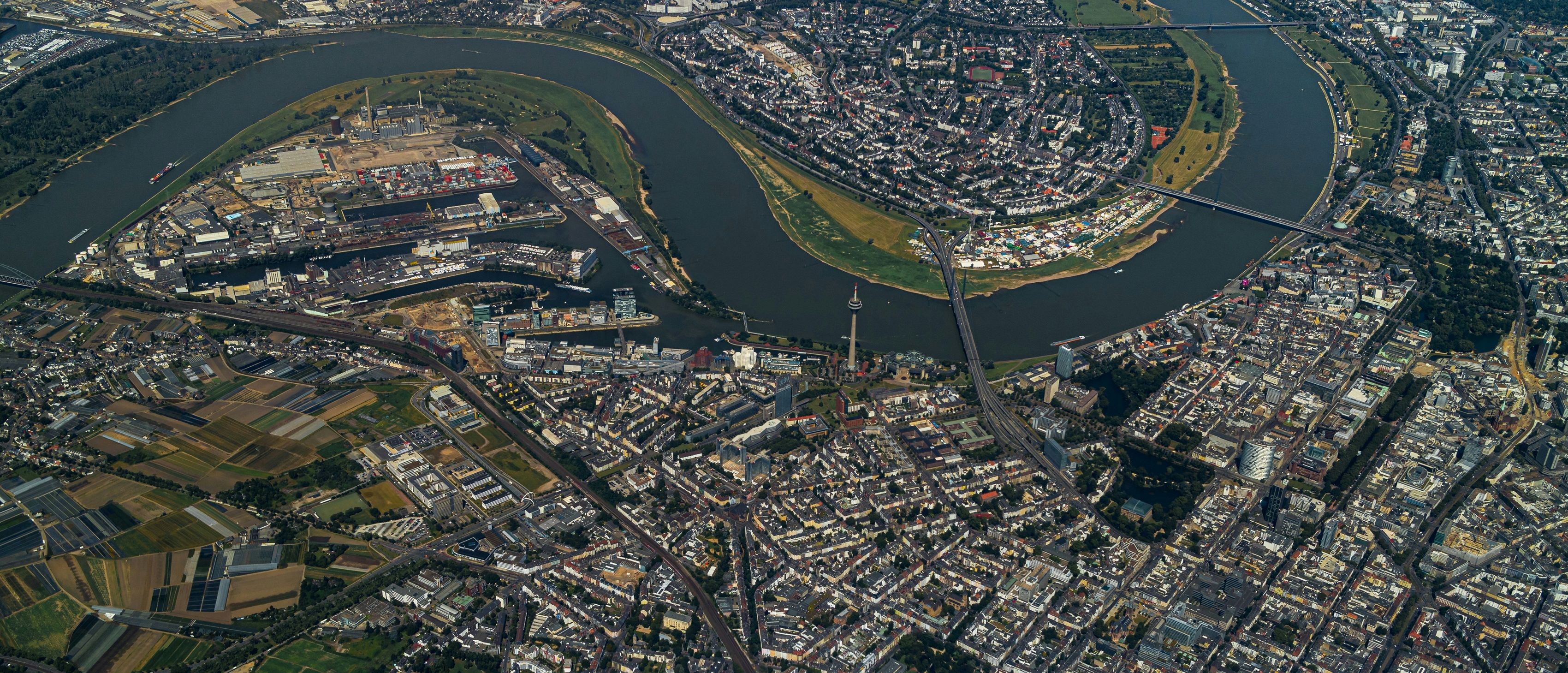
After exploring all the clubs and streets, a stroll along the Rhine is well worth it. Düsseldorf’s Rhine promenade combines the Old Town, history and modern city life. Here you get that Düsseldorf feeling that features in so many Die Toten Hosen songs: a blend of home, melancholy and a party atmosphere.
The atmosphere is particularly strong in the evening. The view of the water, the lights of the Old Town and the sounds of the city make this the perfect way to round off the evening.
Die Toten Hosen and Düsseldorf’s Rosenmontag
Anyone writing about the connection between Die Toten Hosen and Düsseldorf mustn’t forget the carnival. Even though the band has its roots in the punk scene and was often seen as a counterpoint to traditional structures, Die Toten Hosen have long been part of the city’s cultural heart – and thus also part of Düsseldorf’s carnival.
This connection is particularly evident around Rosenmontag. The band members, led by Campino, have repeatedly emphasised their attachment to the city and its traditions. It is less about carnival hits or classic festival tent music, and more about the sense of community that characterises Düsseldorf during these days. It is precisely this sense of solidarity, home and local pride that is also reflected in many of the band’s performances and statements.
Over the past few decades, Die Toten Hosen have regularly been part of carnival events, taking part in celebrations or featuring on themed floats and in political satires. During the street carnival, the Old Town is transformed into one huge party zone – and many of the places fans visit on their ‘Hosen’ tour then take centre stage. Ratinger Straße, the Altbier pubs and the historic alleyways around Burgplatz fill with thousands of people, conveying precisely that blend of exuberance, local pride and rebellion that has also shaped the band’s character.
For fans, a visit during the carnival season is particularly worthwhile. Anyone who experiences Düsseldorf on Rosenmontag will quickly understand why Die Toten Hosen have always remained loyal to their home town, despite their international success. Amidst the parades, Altbier and revellers, a side of Düsseldorf emerges that still reflects the band’s spirit to this day: loud, warm-hearted, down-to-earth and always a little unconventional.
a&o Düsseldorf Hauptbahnhof is the ideal base for Die Toten Hosen fans
If you want to discover Düsseldorf in the footsteps of Die Toten Hosen, you don’t need a hotel right in the Old Town. What’s far more important is accommodation from which you can quickly reach all the key locations in the band’s history. This is exactly where a&o Hostel Düsseldorf Hauptbahnhof comes into its own.
The a&o Hostel is situated on Corneliusstraße, between the main station and the city centre, and is therefore just a few minutes’ walk from the most important ‘Hosen’ landmarks. From here, you can quickly reach the Old Town, Ratinger Straße, the banks of the Rhine and the traditional breweries that define Düsseldorf’s way of life.
The perfect starting point for a ‘Die Hosen’ tour: most of the places of interest to fans are located in the centre of Düsseldorf. From the hostel, you can easily reach the Old Town and many attractions by tram or after a short walk. Königsallee and the Rhine promenade are also in the immediate vicinity.
Ideal for concert-goers: Many fans travel to Düsseldorf when Die Toten Hosen perform in their home town. Thanks to its proximity to the main railway station, the hostel is particularly convenient for guests arriving by train. What’s more, the main tram and underground connections are within easy reach.
Experience Düsseldorf rather than just staying the night: Another advantage is its central location, straddling the line between the classic tourist area and authentic Düsseldorf. Those who follow in the band’s footsteps during the day can explore the Old Town in the evening, sample some Altbier or stroll through the streets that have linked Campino and his bandmates to their hometown for decades. The bars, restaurants and pubs of the Old Town are within easy reach of the hostel.
For fans of Die Toten Hosen, the a&o Hostel Düsseldorf Hauptbahnhof is particularly appealing because of its location. The hostel combines good transport links to the main railway station with short walks to the key locations in the band’s history. Anyone wishing to spend a weekend immersed in punk rock, Fortuna Düsseldorf and the culture of the Old Town will find this a convenient base for exploring the home of Die Toten Hosen.
Düsseldorf is the world’s largest Die Toten Hosen museum
Die Toten Hosen don’t need a traditional museum. Their history is embedded in the city itself. It’s in the streets of the Old Town, in small clubs, in football chants, in a glass of Altbier and in the stories of the people who lived through that era
For Die Toten Hosen, Düsseldorf is far more than just their hometown. The city has shaped the band, and in turn has been shaped by them. Anyone who visits the Ratinger Hof, walks down Ratinger Straße, strolls along the Rhine and discovers Düsseldorf’s alternative side will experience the band’s history far more vividly than in any museum.
Düsseldorf shows why Die Toten Hosen were never just a band from the city. They have become part of its culture – and anyone who follows in their footsteps will, at the same time, discover the soul of Düsseldorf. For true fans, Düsseldorf is therefore not just an ordinary city break – but a journey to the roots of one of the most important German-language rock bands of all time.